Demos
My hobby: short films computed from nothing but C. No footage, no image or sound files, no 3D models, no engine and no GPU — every pixel and every audio sample below is arithmetic.
The demoscene is a computer art subculture that grew up around the home computers of the 1980s: people writing programs that produce music and moving pictures, judged as much on how they were made as on how they look. I came to it from the other end of the same work. By day I write geotechnical finite element software, where a result is only worth having if it is fast and comes out the same twice. A demo is that problem with the machine as the whole subject, and the most enjoyable way I know of finding out where the time and the precision go.
They are made in the evenings and at weekends, to one rule: nothing on screen or in the soundtrack is loaded from a file. The renderer, the scenes and the synthesiser are plain C11 with no third-party libraries, public under MIT at github.com/fkkarakurt/demoscene. How the engine works is on its project page, and the techniques are written up under Demoscene.
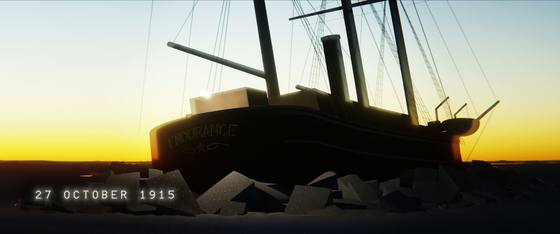
ENDURANCE is a two-minute 4K demo of Shackleton's ship, from the ice in 1915 to the wreck found 3,008 m down in 2022. Pure C, no assets, full 4K MP4.
2:00 · 3840×2160 · 24 fps
TRACE is a 30-second vertical demo where every frame is the soundtrack itself, plotted as an oscilloscope in XY mode plots it. Pure C, no assets. Full MP4.
0:30 · 1440×2560 · 60 fps
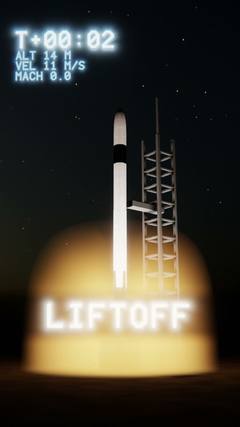
LIFTOFF is a 30-second vertical demo of a rocket launch to orbit, flown by an integrated trajectory rather than keyframes. Pure C, no assets. Download the MP4.
0:30 · 1080×1920 · 60 fps
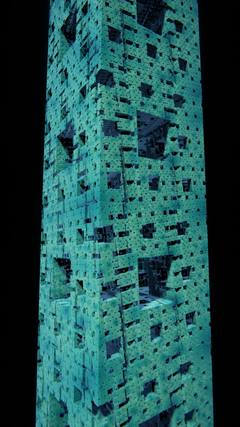
RUNTIME is a 30-second vertical demo that shows its own picture being computed, row by row, as the thread pool renders it. Pure C, no assets. Full MP4.
0:30 · 1080×1920 · 60 fps
COLD START is a two-minute 1080p demo at 60 fps in nine scenes. Every pixel and every audio sample is computed by C code, with no assets. Full-quality MP4.
2:00 · 1920×1080 · 60 fps

Rendered, not real time
The scene cares about honest labelling, so plainly: these are rendered offline. A frame takes seconds to compute rather than milliseconds, and the film plays back at 24 or 60 frames per second. That buys motion blur, depth of field and sample counts no real-time frame budget allows, and it makes them films rather than executables — which is why what is offered here is the video file, with the program that made it alongside as source.
The files
Each download is the film exactly as the encoder wrote it, at the resolution it was rendered at, up to 3840×2160 for ENDURANCE. Nothing is scaled down or re-encoded for the web, so the files are large: from 23.6 MiB for LIFTOFF to 684.6 MiB for COLD START. They are H.264 MP4s that play in any browser or media player, hosted as releases of the repository, and every link starts the download directly. Each page lists the file's size and SHA-256 so a copy can be checked.
On a phone, mind the size: these are downloads, not streams, and the larger ones are worth saving for Wi-Fi.